I Would Use AI to Rehearse a Client Meeting Before Selling a Service
If I were starting a side business with AI, I would want to get better at asking clients what they actually need before getting better at producing more content. A recent story gave me a practical way to approach that.
Ledge.ai covered Google and the University of Tokyo’s Matsuo–Iwasawa Laboratory’s local-government AI examples on October 5, 2026. Google’s announcement, dated September 29, includes a prototype customer simulator in Fukui for learning technical-sales skills. These examples include work at different stages; a prototype should not be treated as a proven, widely deployed service.
The workflow below is my own proposed adaptation. I have not tested that government system, and this is not evidence of higher sales or more clients.
I would rehearse the questions, not just the pitch
Imagine offering social-media support to a local café. “I can make more posts with AI” describes my process. It does not explain which problem I will solve for the owner.
They might need more weekday visits. Or they might simply lack time to sort photos and write captions. Those are different jobs. I would ask an AI assistant to play a fictional café owner so I could find gaps in my questions before a real call.
The output I want is concrete: a list of questions to ask, a clear scope, and promises I cannot responsibly make. That could leave me more room to listen during the actual meeting.
My three-part practice brief
- The offer: ideas and copy for four posts per month; photography is excluded.
- The fictional client: a café owner with quiet weekdays and limited time for marketing.
- The boundary: no guaranteed sales or visitor numbers. Ad spend, photography and extra revisions require a separate agreement.
I can rehearse with fictional information first. When real work details become necessary, I would use only information permitted by my organization’s rules and the chosen service’s terms.

A prompt I would start with
Act as a fictional café owner considering social-media support.
I offer ideas and copy for four posts a month.
Photography, ad management and guaranteed sales are not included.

Your café has quiet weekdays and unsorted existing photos.
Do not reveal your budget or desired outcome until I ask.
Ask one question at a time. Do not immediately agree to buy.
Challenge unclear scope and unsupported promises.
List any fictional assumptions you add at the end.

When I say “review”, give me:
1. Questions I missed
2. Unsupported promises or unclear scope
3. Items to confirm in the real meeting
4. A shorter version of my explanation
Do not claim to predict real customer behavior or market demand.
Start with your first inquiry.
I would not stop at “rate my pitch”. The review needs criteria. Here, I care about missed questions, promises and scope—not whether the assistant thinks I sound confident.
The kind of exchange I would practice
This is an illustrative exchange I wrote, not a recorded AI response.
Owner: “Will more posts bring more customers?”
Me: “I cannot guarantee that. First I want to understand which weekday hours you want to improve and what you already publish. This offer covers four post ideas and captions. Who would supply the photos and publish the posts?”
That will not guarantee a sale. It does make the discussion more specific. I would rewrite it until it sounds like something I could comfortably say.
I would use this at my main job too
| Situation | AI’s fictional role | What I want to leave with |
|---|---|---|
| Presenting an event proposal | A manager asking about the budget | Sources for figures, purpose and open questions |
| A video-production briefing | A client requesting changes | Length, assets, revision limits and deadline |
| A social-media proposal | A contact concerned about results and workload | Responsibilities, goals and review process |
Before a meeting, I want to say the difficult parts out loud once. If that exposes a missing condition before it becomes rework, it could be more useful than polishing another paragraph.

My stopping checklist
- I can explain the client’s goal in my own words.
- The deliverables and excluded tasks are separate.
- I have asked about fees, deadlines, supplied assets and revisions.
- I have not promised an outcome without evidence.
- The next action has an owner.
A high AI score does not matter if these are missing. Once they are covered, I would spend time talking to the actual person rather than extending the simulation indefinitely.
To assess usefulness, I would keep my explanation before and after practice, note the missed conditions discovered, and record preparation time. After the real meeting, I would add unexpected questions. Any effect on sales or conversion needs evidence from actual work.
Before “making money with AI”, I want a clearer offer
I do not want my whole proposition to be “AI makes it cheaper”. I want to explain what I receive, what I deliver, and what I take responsibility for. AI could help me make that explanation concrete.
My takeaway from this story is the practice method: create an opposing role before a real conversation. I would start with one upcoming client meeting, not an elaborate system.
Sources and disclosure
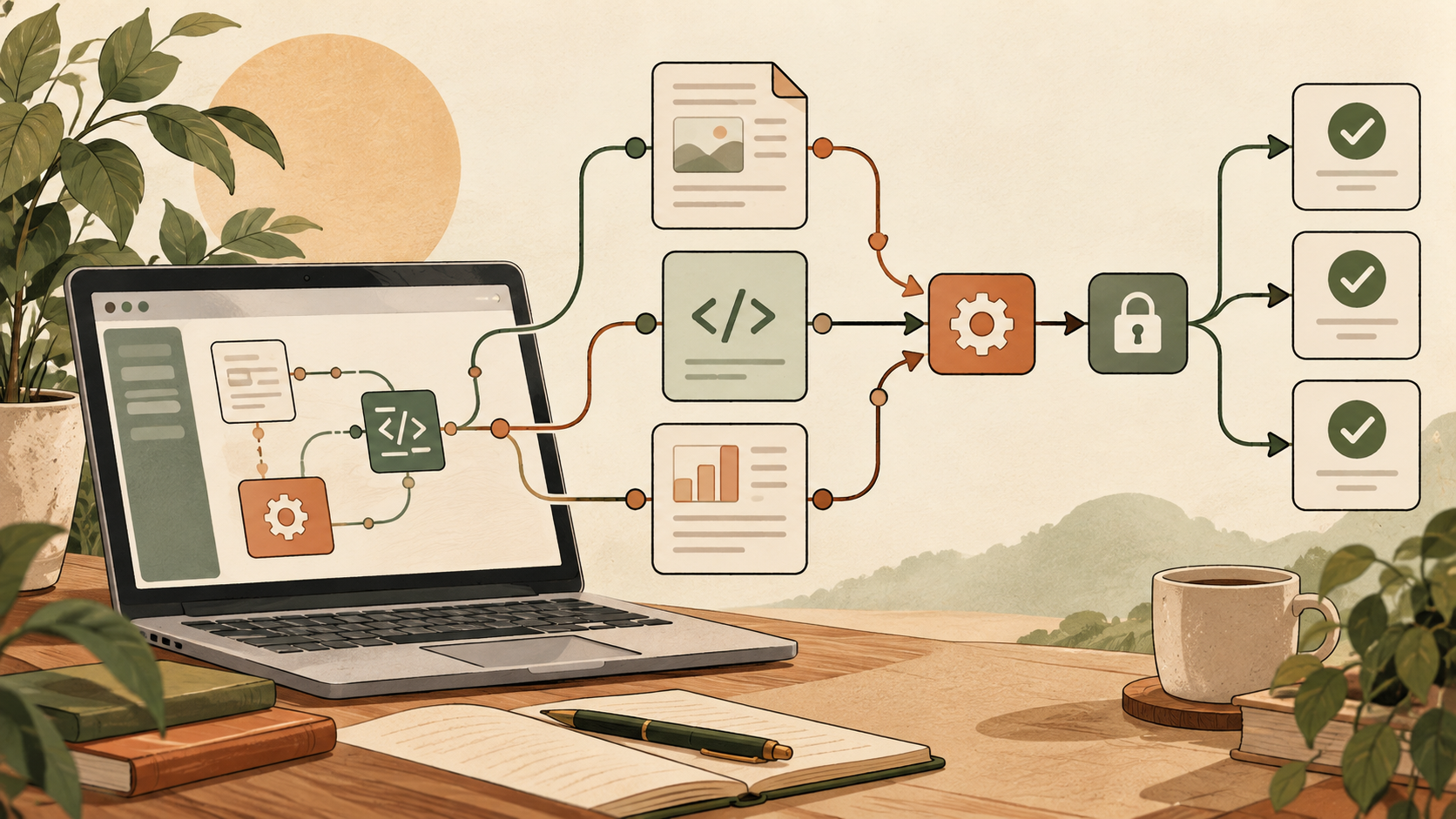
Checked October 7, 2026. Reported facts are separated from my proposed workflow and fictional examples. The illustrations are AI-generated editorial images, not photos of project participants or screenshots of the deployed tools.