GPT-6 Astra for Creators: Capabilities, Access and Practical Workflows
Last verified: September 4, 2026
Editorial correction (September 25, 2026): This article previously displayed an August 3 publication date, which preceded OpenAI’s September 3 announcement. We corrected the displayed date. The source check reported below was performed on September 4; product availability may have changed since then. This is a sourced guide, not a hands-on model benchmark.
Quick answer: GPT-6 Astra is OpenAI’s newest frontier model, announced on September 3, 2026. Its biggest change for creators is not simply better text generation. Astra is designed to complete longer computer-based workflows: browsing, researching, working across documents, building and testing websites, handling spreadsheets, and using professional software with less step-by-step supervision. OpenAI says access is beginning with a limited group of organizations and will expand over the coming days to ChatGPT Plus, Pro, Business and Enterprise users, the OpenAI API, Microsoft Azure and AWS Bedrock.
That makes Astra potentially valuable for creators, publishers and small media teams—but it does not make every workflow safe to automate. The practical approach is to delegate repeatable production work, define clear boundaries, and keep a human review step before anything is published, sent or purchased.
What is GPT-6 Astra?
GPT-6 Astra is OpenAI’s next-generation model for reasoning and action across digital environments. OpenAI describes it as its most capable and aligned broadly deployed model to date, with major improvements in computer use, browsing, software engineering, cybersecurity, science and professional work.
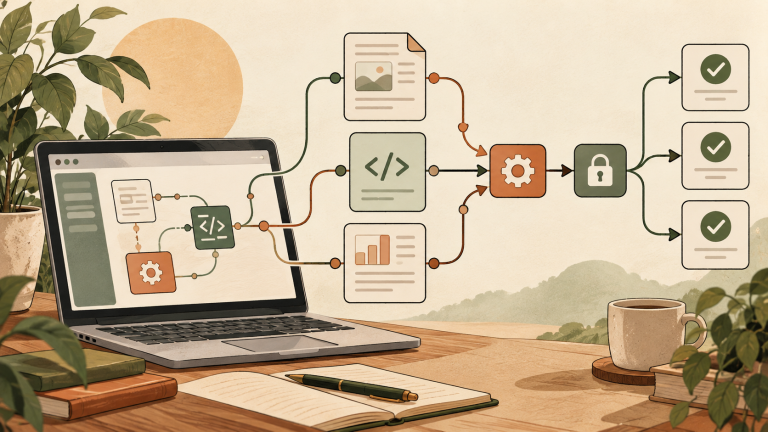
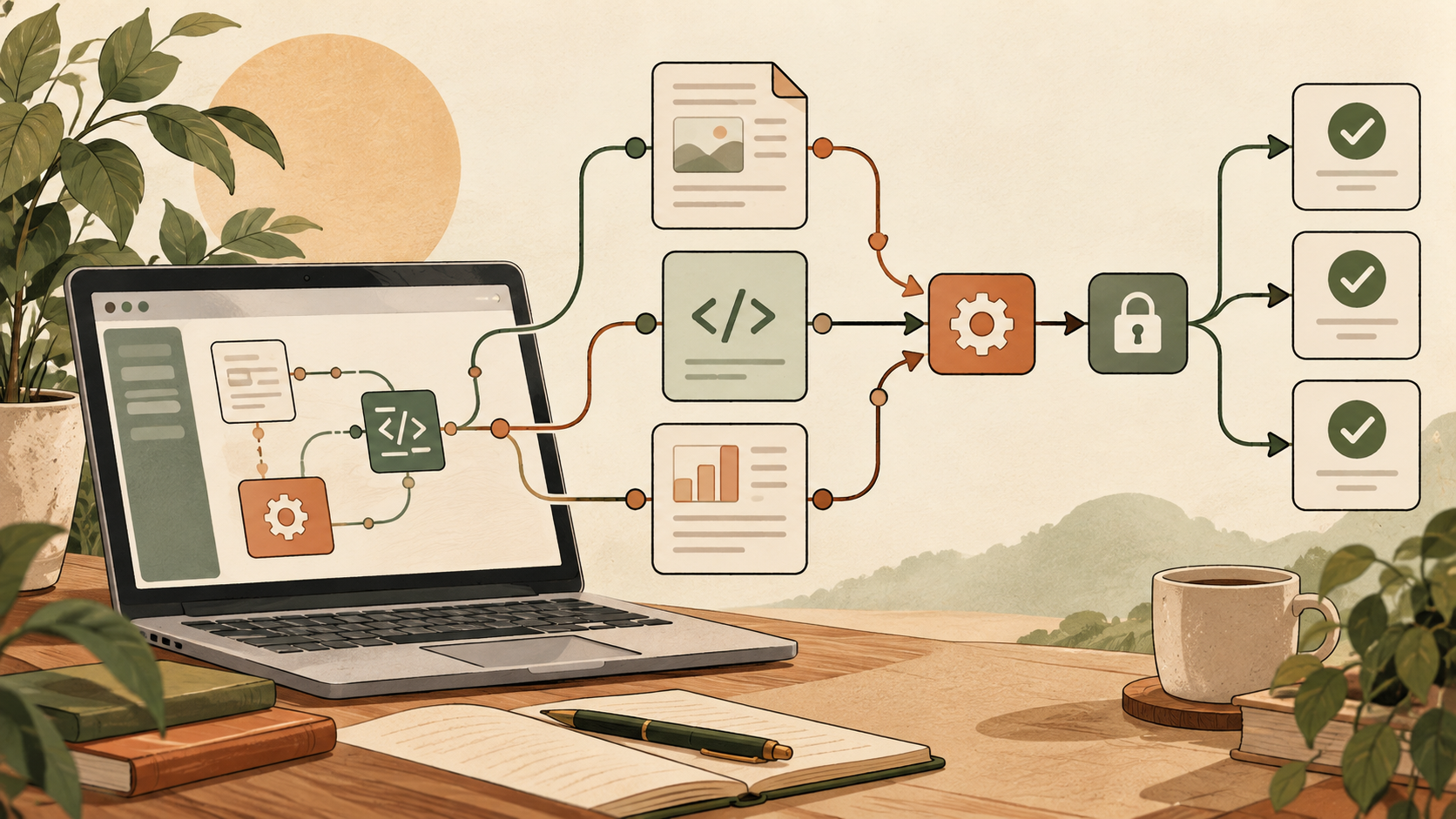
For a creator, the most relevant phrase is computer use. Traditional chat models mainly return text, code or an image. A computer-use model can work through a sequence of actions inside tools: gather information, organize files, update a spreadsheet, apply a document template, build a web page, inspect the result and correct visible problems.
This is part of a broader shift from AI as an answer engine to AI as a workflow operator. For a wider view of that transition, see Media Spec Lab’s Global AI Landscape 2026.
GPT-6 Astra at a glance
| Area | What OpenAI reports | Why creators should care |
|---|---|---|
| Computer use | Stronger performance across browser and desktop workflows | Can handle multistep production and administrative tasks |
| Browsing | Improved online research and navigation | Useful for briefs, fact checks, market scans and source collection |
| Professional files | Better documents, presentations, spreadsheets and analyses | Can turn research into usable production assets |
| Software and websites | Can build, test and visually inspect digital products | Helps creators prototype pages, tools and interactive projects |
| Instruction following | Better judgment when instructions leave room for interpretation | Requires fewer corrections when a brief is clear |
| Safety | Stronger alignment and prompt-injection resistance than GPT-5.6 Sol | Safer for tool use, but still requires permissions and review |
The most useful Astra workflows for creators
1. Research a topic and build a production-ready brief
Astra can browse multiple sources, compare claims and organize the findings into a structured brief. A useful creator workflow might ask it to identify the audience problem, collect primary sources, separate facts from interpretation, propose a content angle and create a list of claims that still need verification.
The critical improvement is continuity. Instead of treating research, outlining and document formatting as separate chats, an agentic model can carry context through the sequence. Still, every source should be opened and checked before publication. Media Spec Lab’s guide to cited AI research contains a verification checklist that applies to any research system.
2. Repurpose one approved source into multiple formats
Creators frequently turn a video, podcast or long article into a newsletter, social post, short script and presentation. Astra’s professional-work capabilities make it a strong candidate for coordinating that process.
The safest version starts with one approved source package and a channel-specific brief. Tell the model which facts must remain unchanged, which quotations are cleared for use, the target length for each platform and what requires human approval. Do not ask it to “make everything viral.” Ask it to preserve the core claim while adapting the hook, pacing and format.
3. Build and test a landing page
OpenAI highlights Astra’s ability to create websites and perform frontend quality checks. For independent creators, this can shorten the path from an idea to a working lead magnet, calculator, portfolio page or campaign landing page.
A good workflow includes acceptance criteria before building:
- Mobile and desktop layouts must both work.
- Every button needs a real destination.
- Forms must display clear success and error states.
- Images need descriptive alt text.
- The page must not publish until the final preview is approved.
The testing step matters as much as generation. A page that looks polished but contains a broken form or misleading button is not finished.
4. Organize a content operation
Astra can potentially connect research, calendars, files and reporting into one operating loop: identify an opportunity, draft a brief, prepare assets, update the editorial calendar and compile performance results. Connections to external services still depend on the apps, permissions and policies available to your account.
Start with read-only access wherever possible. Media Spec Lab’s ChatGPT Apps and Plugins guide explains how to add work tools gradually without granting unnecessary access.
A practical creator workflow
- Define one outcome. Example: “Produce a cited article brief for beginner YouTube creators,” not “grow my brand.”
- Name the allowed sources. Prefer official documentation, first-party announcements and original datasets.
- Set boundaries. State which folders, accounts and websites may be used, and which must not be changed.
- Request checkpoints. Review the research plan, then the evidence, then the draft.
- Require a verification table. List each important claim with its source and date.
- Test the output. Open links, inspect layouts, recalculate figures and confirm file formats.
- Approve external actions separately. Publishing, emailing, payments and permission changes deserve a final human check.
Prompt template for a creator workflow
Goal: Create a production-ready brief for [content project].

Audience: [specific audience]
Primary outcome: [what the audience should learn or do]
Approved sources: [official sites, documents or folders]
Deliverables:
1. Research summary
2. Evidence table with source URLs and dates
3. Recommended angle
4. Detailed outline
5. Claims that still need human verification

Boundaries:
- Do not publish, send or purchase anything.
- Do not use sources older than [date] unless they provide necessary history.
- Separate confirmed facts from inference.
- Stop and ask before changing files or permissions.

Quality check:
Open every cited URL, check dates, flag contradictions and list uncertain claims.
What Astra does not solve
A stronger model does not remove weak inputs, unclear goals or legal responsibility. It can still encounter outdated pages, conflicting evidence, inaccessible tools and workflows that require human judgment. Model benchmarks also do not guarantee identical performance in your exact software stack.
Creators should be especially careful with:
- Copyrighted source material and style imitation
- Private client files and unreleased campaigns
- Health, legal and financial claims
- Automatic publication without fact checking
- Account permissions that are broader than the task requires
OpenAI’s safety materials also note that Astra reaches a higher level of cybersecurity capability than earlier models. That is important for organizations with sensitive systems. Use managed accounts, least-privilege permissions, activity logs and explicit scopes for any production deployment.
GPT-6 Astra availability
OpenAI announced Astra on September 3, 2026. At launch, the company said it was rolling out first to a limited set of organizations, with availability planned over the following days for ChatGPT Plus, Pro, Business and Enterprise users, the OpenAI API, Microsoft Azure and AWS Bedrock.
A missing model selector does not necessarily mean your account is ineligible; staged rollouts can reach accounts at different times. Check OpenAI’s current product page and release notes rather than relying on screenshots from another user. Pricing, usage limits, regional availability and tool access may change after this article’s verification date.
Should creators switch immediately?
Use Astra first where the cost of correction is low and the benefit of longer workflow continuity is high. Research organization, draft formatting, spreadsheet cleanup, content inventories and prototype pages are sensible tests. Keep established tools for workflows that already perform reliably until Astra shows a measurable improvement.
Run the same representative task with your current model and Astra. Compare completion time, corrections required, factual errors, formatting quality and total cost. A model is worth switching to when it improves the complete workflow—not merely when it produces a more impressive first answer.
FAQ
Is GPT-6 Astra available to free ChatGPT users?
OpenAI’s launch announcement names Plus, Pro, Business and Enterprise plans for the upcoming broader rollout. It does not list the Free plan. Check the current ChatGPT plan page because availability can change.
Can Astra publish content automatically?
Its computer-use capabilities may support publishing workflows when the necessary tools, permissions and confirmations are available. You should still require a final review for facts, links, rights, audience and account selection.
Is Astra better than GPT-5.6 Sol?
OpenAI reports higher performance in computer use and several professional benchmarks, plus stronger alignment and prompt-injection resistance. Your result will depend on the task, tool access, prompt quality and review process.
What is the best first test for a creator?
Choose a repetitive task that currently takes 30 to 60 minutes, uses non-sensitive information and has an objective definition of done. Run it with a checklist and record how many manual corrections remain.
Official sources
- OpenAI — GPT-6 Astra: A New Generation of Intelligence
- OpenAI — Safety Overview: GPT-6 Astra
- OpenAI — Path to Astra: Critical Capabilities and Frontier Safeguards
Bottom line: GPT-6 Astra is most significant for creators as a workflow model, not simply a writing upgrade. Give it narrow objectives, verified sources, limited permissions and clear checkpoints. Measure the finished workflow before moving important production work onto it.
From the publisher: how I would decide
For publishing work, I would use Astra to carry one approved source through a complete production brief before expanding into multiple channels. My concern is that repurposing can multiply an unsupported claim just as quickly as it multiplies useful material. I would therefore settle the evidence and intended audience first, then adapt the format. A landing page would earn its place only after its links and intended interactions work. That is the point where a workflow becomes useful to MSL rather than simply producing more assets.