Google Deep Review: I Would Start with a Claim That Outruns Its Numbers

Checked October 19, 2026. This is official-source research and a proposed exercise, not a hands-on test.
Google Research announced public access to Deep Review on October 14. Ledge.ai covered the announcement on October 18. The official announcement describes two free document reviews per week and initial PDF and plain-text inputs, with multi-file input still forthcoming. Official announcement
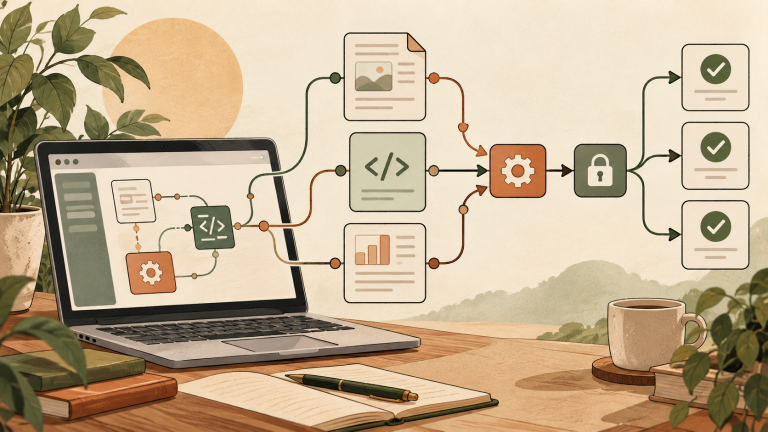
For an editor preparing a proposal or production report, I would begin with a narrower question than “Is this document good?” Can the reviewer show where a conclusion goes beyond the numbers? MSL created the following fictional exercise. It contains no client data and is not a model response.
Prepare the answer before asking for a review
“April produced 10 enquiries from 100 visits. May produced 20 enquiries from 200 visits. Because enquiries doubled, the report concludes that a page redesign doubled the enquiry rate.”
The counts doubled. The rates did not: both are 10%. Nor do these observations alone establish that a redesign caused the change. Arithmetic and causal interpretation need separate checks.
I would place the small table, the conclusion and its context in one document. Before submission, I would write an answer key: counts increased; rates stayed level; attribution is unsupported; the conclusion should distinguish those points. This makes the review assessable without relying on its confidence or tone.
Turn comments into editorial decisions
I would sort feedback into three groups. Recalculable observations go back to the original table. Requests for missing evidence remain unresolved until that evidence exists. Stylistic preferences are judged against the intended reader. A fluent suggestion should not quietly become a new fact.
An exercise record can stay simple: document version, review date, exact comment, source passage, independent check and decision. If the system misses the planted issue, record that too. One successful answer does not establish reliability across a different kind of document.
Retention matters alongside training policy
Google says uploaded documents are not used to train or improve its models, while retaining them for one year for display to the user. Those are distinct conditions. I would consider public or fictional materials for an initial comparison and defer confidential uploads and automatic approval. Organisation rules and current service terms should be checked before real project material is introduced.
This article does not claim that Deep Review detected the exercise’s errors. It proposes a way to decide whether review comments help an editor make traceable corrections. The final decision still needs the source document and a reason the editor can explain.
Sources: the Google Research announcement linked above; Ledge.ai discovery coverage. Checked October 19, 2026.